
WVU Football
By the Numbers: Mountaineers’ Season Ends in 52-28 Blowout Loss to Utah

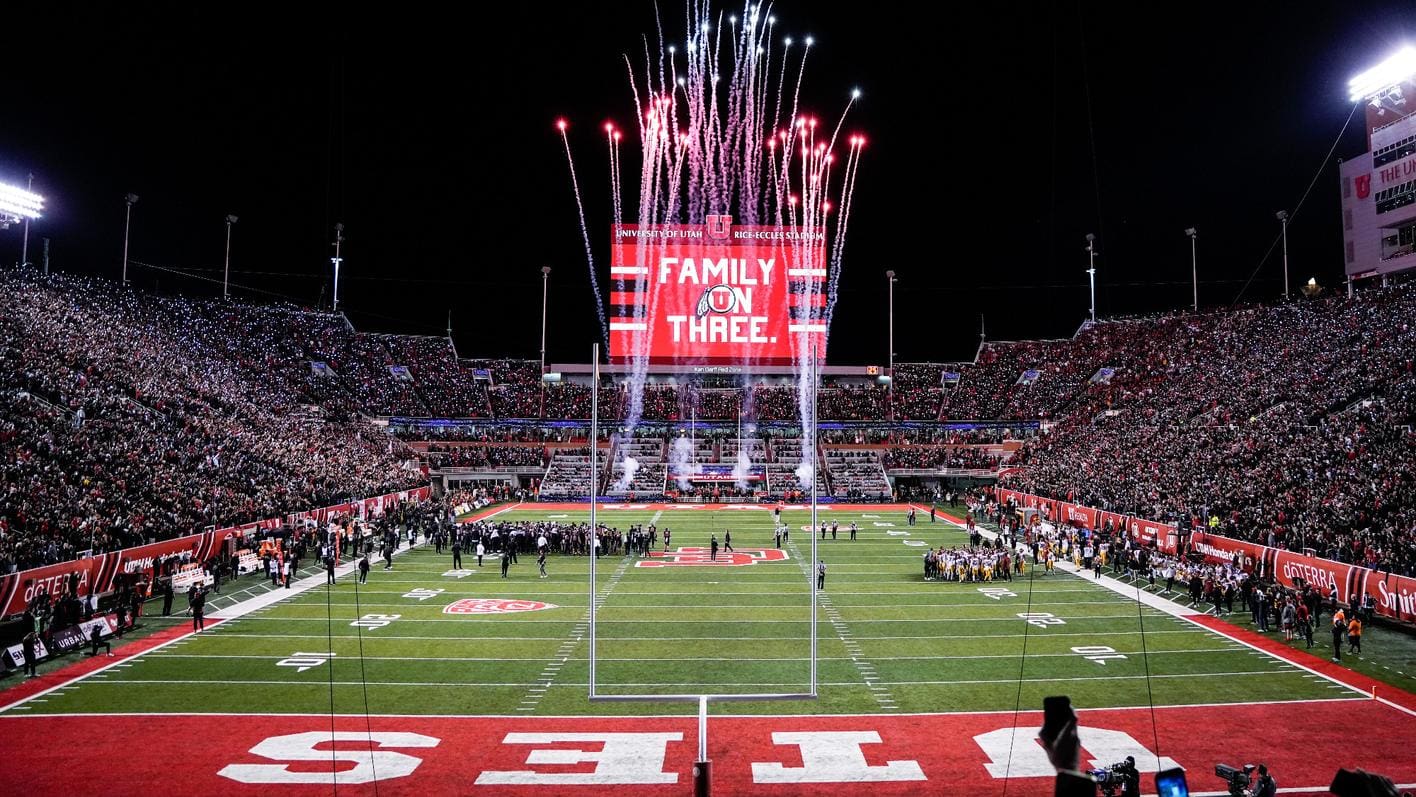
The West Virginia Mountaineers fell to the Utah Utes 52-28 on Nov. 28, 2026, at Rice-Eccles Stadium. Utah commanded the game early, burying the Mountaineers under a massive first-half offensive avalanche. The Utes surged to 38 unanswered points to start the matchup, highlighted by explosive touchdown passes from D. Dampier and a back-breaking second-quarter punt return for a score.
West Virginia finally broke through just before halftime on a short Scotty Fox Jr. rushing touchdown, but the enormous initial deficit proved completely insurmountable. The Mountaineers found more rhythm in the second half. Fox tossed touchdown passes to A. Weaver-Bomar and D. Epps, while M. Boswell broke loose for a 40-yard rushing score late in the fourth quarter. That final run was directly set up by an Ashton Woods interception.
However, West Virginia ultimately struggled to sustain early drives—converting just 7 of 16 on third down. Combined with Utah’s flawless red-zone execution, a Mountaineer victory was never truly within reach.
Team Box Score: West Virginia vs. Utah
Utah’s remarkable passing efficiency completely overshadowed West Virginia’s methodical rushing attack in a highly lopsided affair.
| Statistic | West Virginia | Utah |
|---|---|---|
| Points | 28 | 52 |
| Total yards | 444 | 531 |
| Passing yards (comp/att) | 253 (15/28) | 420 (20/31) |
| Rushing yards (att) | 191 (50) | 111 (38) |
| Yards per play | 5.7 | 7.7 |
| First downs | 23 | 24 |
| Third-down conversions | 7/16 | 7/13 |
| Fourth-down conversions | 0/0 | 0/1 |
| Red-zone efficiency | 1/2 | 4/4 |
| Turnovers | 0 | 1 |
| Sacks allowed | 2 | 2 |
| Penalties-yards | 3-30 | 6-50 |
| Time of possession | 28:41 | 31:19 |
The most glaring disparity came through the air, where the Utes drastically outpaced the Mountaineers while averaging a robust 7.7 yards per play overall. Despite committing zero turnovers and running the ball 12 more times than their opponents, West Virginia simply could not keep pace. Their inability to match Utah’s explosive downfield passing strikes ultimately sealed their fate.
WVU Offensive Leaders
Quarterback Scotty Fox Jr. shouldered the bulk of the offensive load for the visiting Mountaineers, contributing both through the air and on the ground. Wide receiver DJ Epps emerged as his primary weapon, consistently stretching the field to keep West Virginia moving.
| Player | Position | Key Stat Line |
|---|---|---|
| Scotty Fox Jr. | QB | 15/27, 253 Pass Yds, 2 Pass TDs, 18 Rush Yds, 1 Rush TD |
| DJ Epps | WR | 5 Rec, 97 Rec Yds, 19.4 Avg, 1 Rec TD |
| Amari Latimer | RB | 16 Carries, 43 Rush Yds, 2.7 YPC |
| Martavious Boswell | RB | 1 Carry, 40 Rush Yds, 1 Rush TD |
Despite Fox accounting for three total touchdowns and remaining interception-free, he took two sacks. The Mountaineers’ rushing attack lacked a sustained push, as primary backs Amari Latimer and Cam Cook managed just 43 yards apiece on a combined 29 carries. This lack of early-down efficiency frequently stalled promising drives. While Martavious Boswell injected late life into the running game with a 40-yard touchdown sprint, the explosive play arrived long after the matchup was out of reach.
WVU Defensive Leaders
West Virginia’s defensive unit faced a grueling challenge from the opening whistle, struggling to set a positive tone against a relentless Utah passing attack. Despite the lopsided scoreboard, a few key Mountaineer defenders fought valiantly to limit the overall damage.
| Player | Position | Tackles | TFL / Sacks | Takeaways |
|---|---|---|---|---|
| Geimere Latimer II | DB | 8 | 0.0 / 0.0 | 1 FF |
| Kameron Reddic | SAF | 7 | 0.0 / 0.0 | None |
| Will LeBlanc | DL | 5 | 2.0 / 1.0 | None |
| Ashton Woods | LB | 1 | 0.0 / 0.0 | 1 INT |
The Mountaineers were repeatedly exposed by explosive downfield passing strikes, failing to consistently pressure the quarterback or tighten their secondary coverage in critical moments. However, they did manage to generate a few notable disruptions, highlighted by Woods’s interception and a forced fumble from defensive back Geimere Latimer II. Unfortunately, recording just two total sacks—courtesy of Will LeBlanc and Corey McIntyre Jr.—proved completely insufficient to derail Utah’s flawless red-zone efficiency or slow their high-powered passing game.
Where the Record Stands
Following the loss to Utah, West Virginia falls to a 5-7 overall record and a 2-6 mark in Big 12 conference play. The defeat extends the Mountaineers’ losing streak to four games and drops their season road record to 1-3. West Virginia remains stationed in 14th place in the Big 12 standings picture. Neither the Mountaineers nor the Utes received a ranking or votes in the Week 14 Associated Press Top 25, Amway Coaches Poll, or College Football Playoff rankings.
Looking Ahead to the Offseason
West Virginia does not have a next scheduled opponent, as the loss to Utah marks the end of their 2026 campaign. Finishing below the required win threshold, the Mountaineers have wrapped up their schedule and will officially miss bowl eligibility.
Ending the year on a four-game losing streak, the program faces an important offseason evaluation period. Moving forward, the team must prioritize fixing a porous pass defense that was repeatedly exposed by the Utes, while also searching for more consistent early-down rushing production. Mountaineer fans will now turn their attention to the offseason, hoping the program can successfully rebuild for a stronger showing next fall.