
Opinion
Asti: Door is Open for WVU Football to Claim a National Title


The West Virginia Mountaineers are home to a national championship. For real? Not really. But they should be. Seriously.
A recent decision by another program now opens the door for the WVU football program to revisit its history. The point of this story? To set the record straight and explain why West Virginia deserves to be recognized as the 1922 national champion.
Before I go into detail and explain why WVU should claim this particular national title, it’s important to cover the landscape of the sport over the past century plus.
College football is riddled with controversial and disputed national championships. Part of this is due to programs claiming titles decades after those seasons were played. And one aspect of college sports that will never change is the discrepancy over the past. The addition of the College Football Playoff has only exacerbated this issue.
Unlike in professional sports, it’s not really possible to ever truly crown a legitimate champion. It just isn’t. There are far too many teams involved and there’s no possible way to ever ensure every team plays a fair schedule in comparison to their peers. Honestly, this will undoubtedly be an eternal issue in the college athletics. But I’m not here to debate the present or what could happen in the future, the point of this story is to discuss the past.
Auburn literally just did this, awarding themselves four more titles. As of August 19, 2025, the Tigers claim nine national championships. They even claim a title from the 2004 season, a year they finished ranked No. 2 by both the Associated Press and Coaches Poll. They ended the season 13-0 with a win in the Sugar Bowl, but were left out of the BCS National Championship Game.
Yes, sometimes these titles have been awarded to schools well after the fact by polls deemed major selectors. However, there are also championships certain programs say they own despite no evidence actually supporting their claim.
Some examples of absurd claims throughout history
To fully paint the picture of the claiming controversy, WVU’s arch rival up north claims to be home to nine national championships. Pitt promotes this so much, it’s on the football program’s biography section of its X (formerly Twitter) account. It’s even spelled out on a big sign over the home team’s locker room at Acrisure Stadium. None of that makes all nine of Pitt’s claims fact though.
So what is closer to reality? Well, a more accurate depiction of the (still rich) history of the Pitt Panthers has the school as a five-time national champion. The NCAA agrees with five of Pitt’s nine when using approved major selectors. But instead of just taking five national championships, including one that argues as one of the greatest college teams ever in 1976, and celebrating those, Pitt decided to cook up four more.
The claimed season that stands out more than any other is 1934. According to Pitt, they are the 1934 national champion. What Pitt can’t deny is a literal 13-7 loss to Minnesota – a team many selectors say is the real national champion for that season.
Minnesota went 8-0 that year. So how can Pitt argue being the champs over an undefeated team they lost to? Apparently, because they said so. There was no playoff or BCS system at that time, but a head-to-head loss to the other school in the debate is tough to pretend didn’t happen.
By no means is this just a Pitt thing either. 1973 is perhaps the most asinine season as far as titles claims of them all. Notre Dame and Alabama both claim a share of the 1973 title. But here’s the kicker – these two teams literally played each other in a bowl game to close that season. Some argue national champions back then were only about the regular season, as insane as that thought process is, but if postseason games were played and we are retroactively claiming titles, why would anyone want to ignore a matchup between the two top teams.
Back to reality and what factually occurred, the Fighting Irish capped off an undefeated season by beating the Crimson Tide 24-23 (yes, there’s humor in it being a game decided by one point) in the Sugar Bowl. Despite this fact, the Coaches Poll decided to award Alabama the championship, thus making the bowl game completely pointless and a waste of time.
WTF?!
And for a more recent example, UCF goes so far in their claim of the 2017 title that the words “2017 National Champions” are plastered on the stadium’s press box. UCF claims this extremely controversial (and ridiculous) title because of something called the Colley Matrix. The Colley Matrix ranked UCF as the No. 1 team, but the wide belief from petty much everyone who matters outside of Central Florida is that the Colley Matrix did this with the intention of making a mockery of the system, or just for the fun of it. I even heard that exact language used by someone who works within the UCF athletic department while discussing this in their press box in 2023.
The proof of this belief can also be supported by how the Colley Matrix has ranked teams throughout the poll’s history.

If you ask most college football fans when was Notre Dame’s last championship season, most would say 1988 when Lou Holtz led the Irish to a win over WVU in the Fiesta Bowl. Funny enough, if you go by the Colley Matrix, that’s incorrect. According to the Matrix, the answer is 2012. That’s right, the Colley Matrix feels Notre Dame is the one true national champion from the 2012 season. This poll has Notre Dame as its lone No. 1 team despite Alabama, the program who won the BCS national title, absolutely destroyed Chip Kelly and the Irish by a lopsided score of 42-14 in a game classified as being for the literal national championship. There’s also no “it was a one-point game” argument this time either. WTF?!
There are also several other instances like this from the Colley Matrix. Oh, and to be fair to Notre Dame here, the Irish ignore the Colley Matrix and do NOT claim that season as a national championship. Thank God.
The Colley Matrix also says Oklahoma State is the national champion for 2011, not Alabama. And even if you hate the BCS, that is simply a ludicrous stance. All you need to know is both teams finished with one loss. OSU lost to an Iowa State team that ended the year 6-7. Alabama’s only loss came to the then No. 1 LSU Tigers. OSU beat five consensus ranked teams. Alabama beat seven. What are we doing here?
So even though UCF did go undefeated and did beat Auburn in a bowl game (still very impressive, congrats), the Knights’ claiming a national championship in a year they have only two wins over consensus ranked teams is a tough pill to swallow. So who was the other ranked team UCF beat? The answer is a 62-55 double overtime win over No. 20 Memphis. To compare that to Alabama, who won the CFP, the Crimson Tide had five (two from non conference play). Does that sound fair?
Awarding UCF a championship for that body of work sends the message that teams are better off just rolling through a weak schedule as a Group of 5 rather than even joining the Power Four.
Honestly, there are plenty of other examples I could mention. Rutgers and Princeton being named the first co-champs in 1869 at 1-1 kicked off the sport’s history of title claims.
But it’s time to get to the point.
Back to 1922 and the point of this story!
Now back to why I’m here and why WVU should claim 1922.
For anyone who tries to say someone who clearly hates claims supporting one is hypocritical, there are two main reasons why it’s not.
First off, if everyone is going to do the retroactive claiming thing, especially with claims that often make no sense at all, then why shouldn’t West Virginia jump onboard and do the same? Secondly, WVU’s actual case for the 1922 title makes a lot more sense than what other schools argue, most notably the ones explained above.
As things stand for 1922….
As things stand, California, Cornell, Iowa, Princeton and Vanderbilt each claim a share of the 1922 national title. A few of those schools do have a case, but why should five schools share a title for this season while the Mountaineers are left out?
In 1922, Cal went 9-0, Cornell was 8-0, Iowa was 7-0, Princeton went 8-0, Vanderbilt 8-0-1 and WVU accomplished a 10-0-1 season that concluded with the Mountaineers’ first bowl win.
For more context, West Virginia played the most games of that bunch and won the most of any of those teams, yet each of them are champions and West Virginia is not? For further context, WVU shutout seven of its 11 opponents and outscored every team it played 267 to 34.

And yes, WVU did tie a game, and that’s why this season is not on a Milan Puskar Stadium wall that honors the 1988 and 1993 seasons as WVU’s only undefeated AND untied campaigns. But, when determining a national champion for a given season, the only thing that should matter is what happened during that particular season. That’s also why any argument of another season being a better year for then head coach Clarence Spears doesn’t work either. Spears’ best year can be someone’s educated opinion, but it does not dispute what occurred in 1922. Spears’ Mountaineers deserve the championship just as much, if not more, than the programs who claim it.
Why WVU not claiming 1922 is hypocritical
At the end of the day, and like someone within the WVU football program has said to me directly, claiming a title from 100+ years ago doesn’t do anything for the present day life of the program. And while I agree, that perspective goes against other actions within the athletic department.
Within the last decade, the West Virginia men’s basketball program has claimed a national championship.
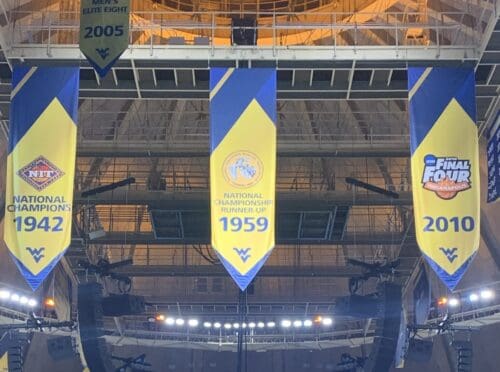
Throughout the history of WVU men’s basketball, the Mountaineers have 31 NCAA Tournament appearances, 13 conference titles, have reached the Sweet 16 11 times, have three Elite 8 years, have been to two Final Fours and claim the 1942 NIT title as a national championship. WVU claims this retroactive title because the NIT was unanimously viewed as the more prestigious national tournament at that time. A giant banner hangs above the WVU Coliseum to honor this claimed title. This banner hangs right next to one for the Jerry West-led NCAA runner-up finish from 1959 and the 2010 Final Four appearance.
If you’re wondering, the 2007 NIT title is on a much smaller banner that’s far away from the three most distinguished seasons in WVU basketball history.
WVSN photo by Mike Asti
So if WVU basketball is going to look into its history and claim a title, why would the football program not do the same, especially when claiming titles is a much more common part of college football’s history than on the basketball side?
The point of this story is not to disparage anyone working at WVU for not doing this already, but to provide the proper context to this seemingly never-ending debate. Let this now serve as an evergreen piece to shed light on why West Virginia deserves a share of a national championship just as much as many schools do theirs.
And to make something clear before it’s brought up, WVU would still deserve the 1922 title, EVEN IF more modern teams won one. Even if the 1988 team defeated Notre Dame…or the 1993 team didn’t tarnish their opportunity at a claim by losing the Sugar Bowl to Florida, or yes, the 2007 team didn’t suffer that devastating 13-9 loss to Pitt that ruined a season that was otherwise destined for a shot at winning an undisputed national championship.
Signifying 1922 as a national championship season isn’t about handing a title to WVU, it’s about a “keeping up with the Jones'” mentality based on the culture, so to speak. It’s about a program that often feels it is disrespected historically standing up for itself and literally claiming what is theirs.
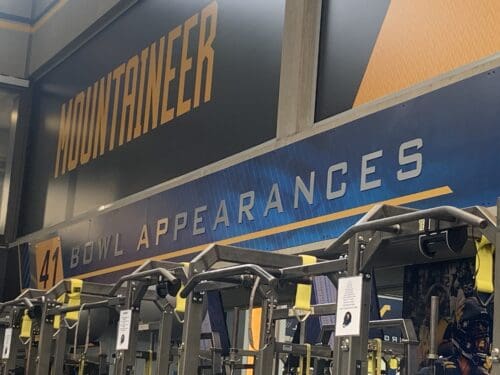
Despite the toxicity of the Neal Brown era, WVU should be proud to be the 15th winningest program, have 41 bowl appearances, a win in the Fiesta, Orange and Sugar bowls, and Peach Bowl too, granted that one came in 1975 prior to it being classified as a major bowl.
WVSN photo by Mike Asti
Courtesy of WVU Athletics
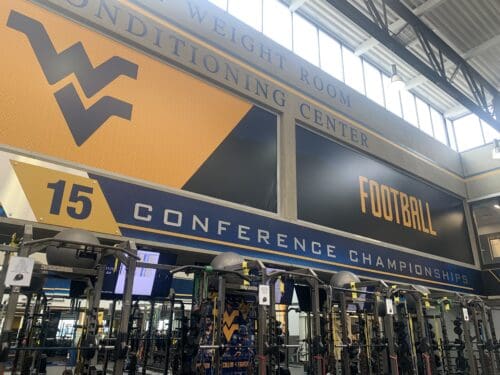
To top it all off, West Virginia has 15 conference titles. Claiming a national championship from the past wouldn’t disrespect any of that history, it would only emphasize it more.
WVSN photo by Mike Asti
If we want to start taking away fake claims, great. I’m all for that. But clearly we are going the other direction. Instead, if programs are going to be allowed to claim titles out of nowhere without providing any evidence to support their case, then the WVU football program needs to take another look at the 1922 season and do the same.
For what the NCAA approves as far as major selectors naming champions -> The FBS Football Championship History.
Find more coverage of the WVU football program at WV Sports Now.